hello, we hope you are very fine.
Glossary:
SCRIPT: It´s the written form of an audiovisaul proyect. It details everything that´s going to be on the screen: dialogues, camera angles, movements, etc, the set pieces, the cast´s image and even how they should perform. Scripts are always from an objective point of view and always should be precise in their words.


StoryboARD: A visual representation of a cinematic proyect. The storyboards is a series of drawings that presents the whole course of a piece. It is more often used in animation or CGI so the animators and artist know exactly what the script needs them to do and how they are going to do it.

Dubbing: Inserting spoken dialogue into an already existing visual footage of a person speaking. Some times it is used for characters that are potrayed physically by an actor but voiced by an entirely different person, or translating a movie for another language without the use of subtitles.

Clapperboard: A tool that allows the editor to sync the audio with the video. When the board snaps, it´s a sign of when a scene begins and where to cut or add the sound during editing. The clapperboard has the numbers of the scene and take so the editor can find the needed footage for the audio.

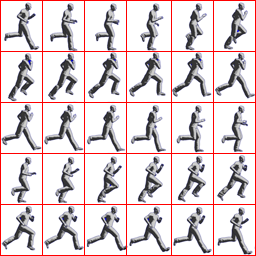
Animation: It´s the fast transition of drawn images that creates the illusion of movements, the same thing a movie reel does, but the images are not captured by a camera.

ADAPTATION: The process of taking the plot or the main idea behind a piece of work from another medium and turning it into a movie. Adaptations must always work in the language of cinema, so it needs to alter the elements of the other mediums.

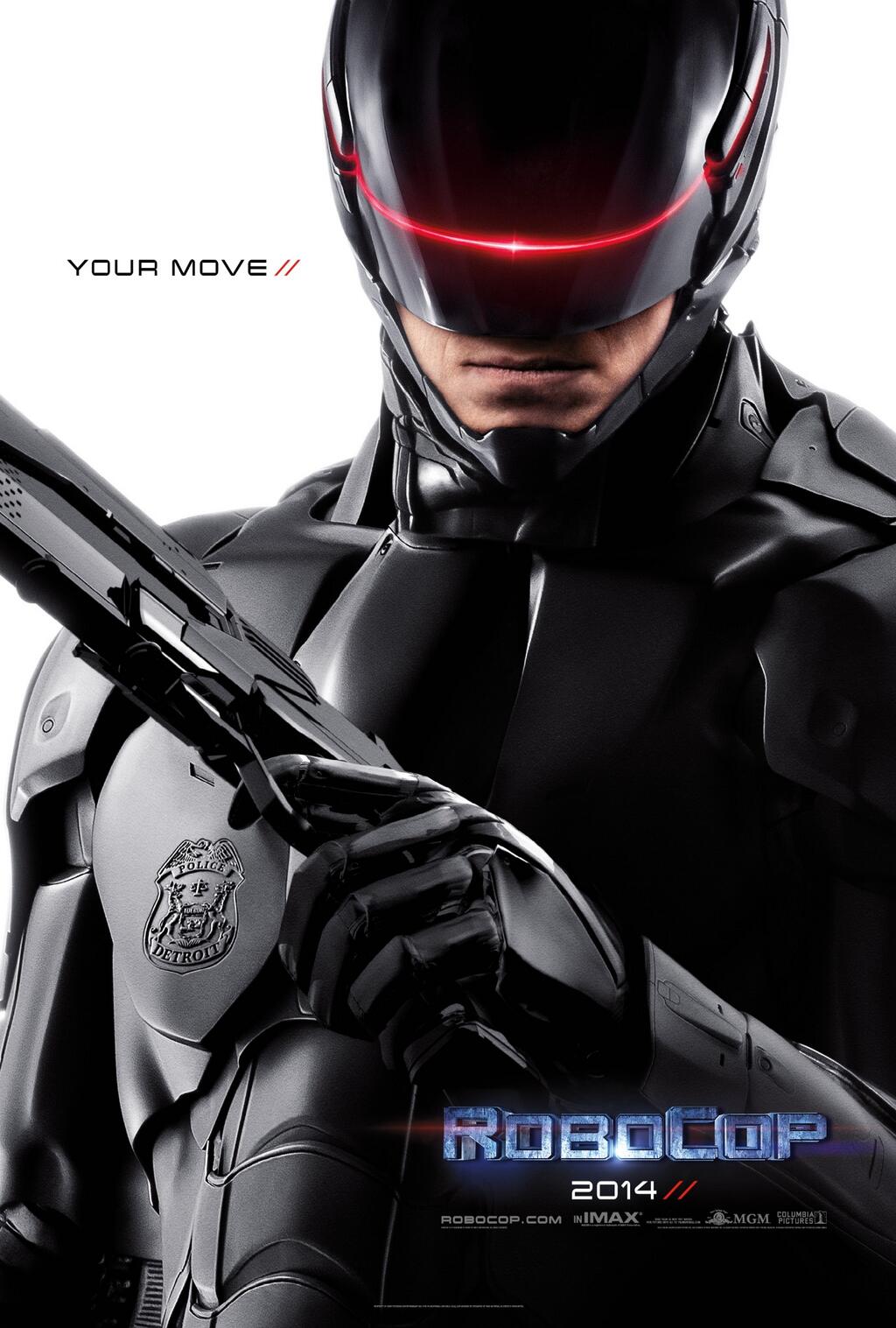
REMAKE: Taking an already existing film and making it again from scratch. A remake can be made either to update a previous work for newer audiences, some times with a different take on it, or triying to enhance a story.

Edition: Preparation of a text, a musical, a movie or a radio or television show to be published or broadcasted, taking care of their form and content.

Dubbing: Inserting spoken dialogue into an already existing visual footage of a person speaking. Some times it is used for characters that are potrayed physically by an actor but voiced by an entirely different person, or translating a movie for another language without the use of subtitles.

Clapperboard: A tool that allows the editor to sync the audio with the video. When the board snaps, it´s a sign of when a scene begins and where to cut or add the sound during editing. The clapperboard has the numbers of the scene and take so the editor can find the needed footage for the audio.

Animation: It´s the fast transition of drawn images that creates the illusion of movements, the same thing a movie reel does, but the images are not captured by a camera.
ADAPTATION: The process of taking the plot or the main idea behind a piece of work from another medium and turning it into a movie. Adaptations must always work in the language of cinema, so it needs to alter the elements of the other mediums.

REMAKE: Taking an already existing film and making it again from scratch. A remake can be made either to update a previous work for newer audiences, some times with a different take on it, or triying to enhance a story.
Edition: Preparation of a text, a musical, a movie or a radio or television show to be published or broadcasted, taking care of their form and content.
(https://translate.google.co.ve/#auto/es/edition)
Editing in the audiovisual branch reflected repeatedly, initially in a
text or better known as script. This idea will be then passed to the final
draft which will be presented to an audience. Editing is also noted in the
video part, modifying and improving the sound and the image that will be
exposed.

Aspects related:
- Fade In: From Black or Solid Color to image.
- Fade Out: From image to Black or Solid Color.
- Cut / Live Cut: From image to image without effects
- Dissolve / Fade: An image melts and disappears, while another emerges.
- Wipe / Sweep: A shot enters or leaves when other enters or leaves in any direction and form, without dissolve.
- Cutaway: In a take is inserted other take that has no visual but logic relationship and later it comes back to the initial take.
- Superimposed / Super taxes: To take or more on other simultaneously.
- Cross-cutting/ simultaneous shots: 2 or more actions happening at the same time
- Jump Cut: Two subsequent shots of the same subject do not coincide in time or space
- Split Screen: Multiple simultaneous shots each in a place without touching the other.
director
of photography: The cinematographer is
responsible for artistic imaging for staging of film, television and video
productions; usually for making films, music videos, TV series, as well as
commercial work, documentaries and industrial films. To perform this work, he
will take decisions regarding lighting, optics, framing and composition,
textures, etc., to assist in the creation of the image of the work.
His work is done hand in hand with the director and other members of the
team, as the art director, makeup artist, and production designer. All these
agreements are reached regarding the type of image that the story requires,
depending on the genre, which is the tone of the story.
The director of photography is also the team leader and the last chamber
responsible.


Storyboard: A sequence of drawings, typically with some directions and dialogue,
representing the shots planned for a movie or television production. The
storyboard montage consists of storyboards and scenes from the film edited
together and then shown with some dance music in the background.

Plano:
It is the relationship in
perspective that the lens has with regard of the square.
Drawing
types:
General Plans:
- · Great General Widescreen Flat or GPG / Extreme Long Shot (ELS)
- · General Plan / Long Shot (LS)
- · Complete Plano / Full Shot

Medium shots:
- · Plano American / American Shot
- · Plano Medium / Medium Shot / Two Shot (MS)

Closeups:
- · Foreground / Close up (CU)
- · Plan Detail / Big or Extreme Close Up (ECU)
- · Insert

Depending on number of people:
·
Group shot:
Several people in the plane
·
Two shot: Two people in the plane
·
Three
shot: Three
people in the plane
CAMERAS:
A device for recording
visual images in the form of photographs, film, or video signals.
Definition From ABC:
When we talk about a camera as an element created to portray different
aspects of reality, statically (by photos) or dynamically (by videos), we note
that not until the second half of the nineteenth century, when the human beings
would have the first models of cameras. While technological developments
related to the management of light existed since ancient times, the first
cameras were not developed until the late nineteenth century.
The cameras should always
have some basic elements, from which the lens is the principal. The lens is
responsible for capturing the light element and focus to portray through the
appropriate device the image that is printed on paper film or saved in the
digital camera’s memory. While cameras can take one picture at a time, the
video cameras are able to take multiple images in sequence, allowing, when
observed, the portrayal of the original movement.

Definition From WORDREFERENCE.COM
An optical device consisting of a lens system set in a light-proof
construction inside which a light-sensitive film or plate can be positioned
The equipment used to convert the optical image of a scene into the
corresponding electrical signals
Casting:
Definition From WORDREFERENCE.COM
·
The
process of choosing actors for a play.
“Selection process of actors, model”. Talent selection process,
according to the number of characters in an audiovisual project, physical
traits and personality that identified in the course of the piece to present to
an audience.

videography: Telecommunication procedure that allows alphanumeric
and graphic display of images on a screen.
(https://translate.google.co.ve/#auto/es/videography)

Film: Establishment
for the screening of films. A thin
flexible strip of plastic or other material coated with light-sensitive
emulsion for exposure in a camera, used to produce photographs or motion
pictures.
(https://translate.google.co.ve/#en/es/FILM)

Definition From WORDREFERENCE.COM
- · A sequence of images of moving objects photographed by a camera and providing the optical illusion of continuous movement when projected onto a screen
- · A form of entertainment, information, etc, composed of such a sequence of images and shown in a cinema, etc (as modifier): film techniques
- · A thin flexible strip of cellulose coated with a photographic emulsion, used to make negatives and transparencies
- · A thin coating or layer
- · A thin sheet of any material, as of plastic for packaging
- · A fine haze, mist, or blur.
María Magdalena Acosta Alonso
Eduardo Arturo Navas Bas
Eduardo Arturo Navas Bas

No hay comentarios:
Publicar un comentario